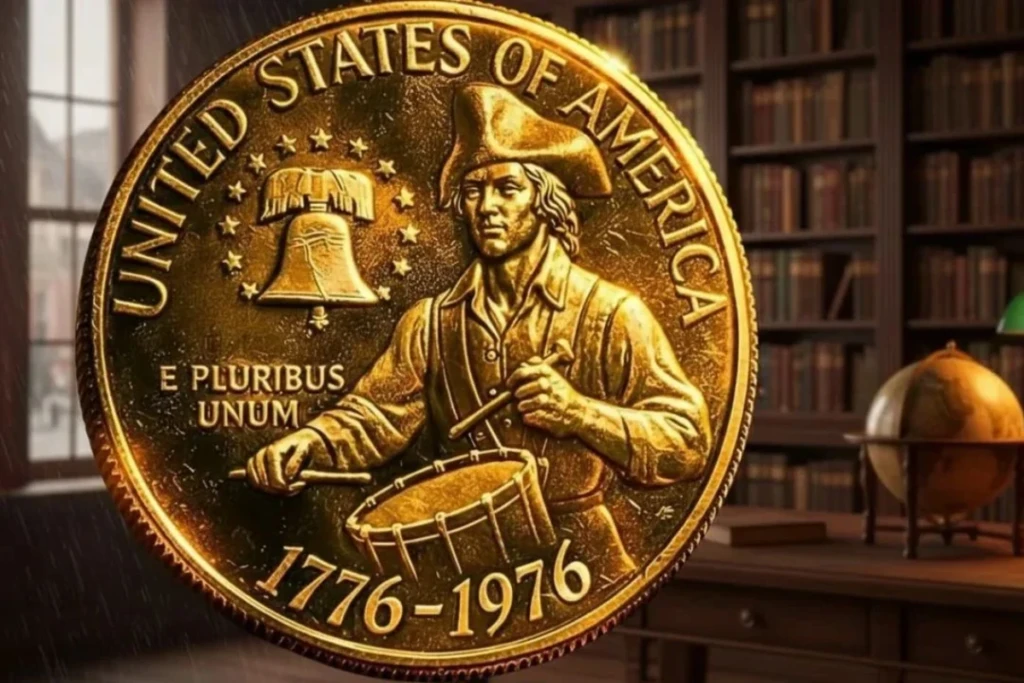
Bicentennial Quarter 1776-1976 Value Guide : The Bicentennial Quarter 1776–1976 is one of the most well-known modern coins of the United States and remains popular with collectors today. It was minted to commemorate the 200th anniversary of American independence. Millions of coins were produced, making this coin very common in circulation. However, certain versions and conditions can still hold good value. Understanding the differences between regular, proof, and rare varieties helps collectors estimate the true value of these historic quarters.
Background of the Coin
The Bicentennial Quarter was issued to commemorate the 200th anniversary of the United States Declaration of Independence. Instead of the standard single date, the coin features the dual date “1776–1976.” These quarters were issued in 1975 and 1976 as part of a special commemorative coin program. The United States Mint produced them alongside the Bicentennial half dollar and dollar. Due to their patriotic theme, many people treasured them as souvenirs.
Design Feature
The obverse of the Bicentennial quarter features the familiar portrait of George Washington. This design was originally created by John Flanagan and remained unchanged except for the dual date. The previous design featured a Colonial drummer boy holding a drum and torch surrounded by thirteen stars. This previous design was designed by Jack L. Ahr. This image represents the spirit and unity of the American Revolution.
Mintage Number
Over 1.6 billion Bicentennial quarters were minted at several United States Mint facilities. The Philadelphia Mint produced the largest number of coins without a mint mark. Denver also produced a large portion marked with the letter “D.” A small number of proof and silver versions were minted in San Francisco with an “S” mint mark. Due to the high mintage, most of the circulated coins remain uncirculated today.

Circulation Value
Most Bicentennial quarters found in pocket change are worth only 25 cents. These coins typically show noticeable wear from decades of circulation. Scratches, dull surfaces, and soft design details diminish collector interest. Since billions of coins were minted, worn coins rarely command a premium. Still, many people treasure them for their historical significance rather than their monetary value.
Uncirculated Value
Uncirculated Bicentennial quarters are coins that were never used in everyday transactions. These coins retain their original mint luster and sharp details. Collectors often classify them as Mint State when they show no signs of wear. Depending on the quality, these quarters can sell for a few dollars. Higher-grade specimens can fetch slightly higher prices among collectors.
Silver Proof Value
Some Bicentennial quarters were struck in a special 40 percent silver composition. These coins were not released for general circulation and were sold in collector sets. Silver versions typically bear the San Francisco Mint’s “S” mint mark. Their value depends on both collector demand and the price of silver. In many cases, they are worth several dollars or more.

Mint Marks
Mint marks help identify where a Bicentennial quarter was minted. Philadelphia coins typically have no mint mark below the date. Denver coins have a small “D,” while San Francisco coins have an “S.” The San Francisco Mint primarily produced proof and silver collector coins. Knowing the mint mark helps collectors determine rarity and potential value.
Mistake Coins
Some Bicentennial quarters with minting errors can command significant value. Common errors include double strikes, off-center designs, and doubled dies. These errors occur during the coin-making process. Because errors are much less common than standard coins, collectors often pay more for them. The larger and more obvious the error, the higher the potential value.
Impact of Grading
Grading of coins plays a key role in determining the value of Bicentennial quarters. Professional grading services evaluate coins for wear, luster, and surface quality. Higher grades indicate better preservation and sharper details. Coins graded at the top Mint State level are very difficult to find. Because of this, they often sell for significantly higher prices than average coins.

Collector Demand
Collective interest significantly influences the market for Bicentennial quarters. Many collectors focus on completing date and mint mark sets. Others specifically seek high-grade coins or unusual mint errors. The coin’s patriotic theme also makes it attractive to new collectors. Consistent demand ensures that the collector value of premium examples remains stable.
Selling Tips
Anyone selling a Bicentennial quarter should first determine its condition and mint mark. Examining the silver version for unusual errors can reveal hidden value. Coins in very good condition may benefit from professional grading. Online marketplaces, coin dealers, and coin shows are common selling options. Comparing recent sale prices helps sellers estimate true market value.
Conclusion
The Bicentennial Quarter 1776–1976 remains an important part of American coin history. While most circulated examples are priced at face value only, some versions can command higher prices. Silver issues, high-grade coins, and mint errors attract the most collector interest. Understanding mint marks, grading, and rarity helps determine true value. For both collectors and hobbyists, the Bicentennial quarter remains historically significant and collectible.