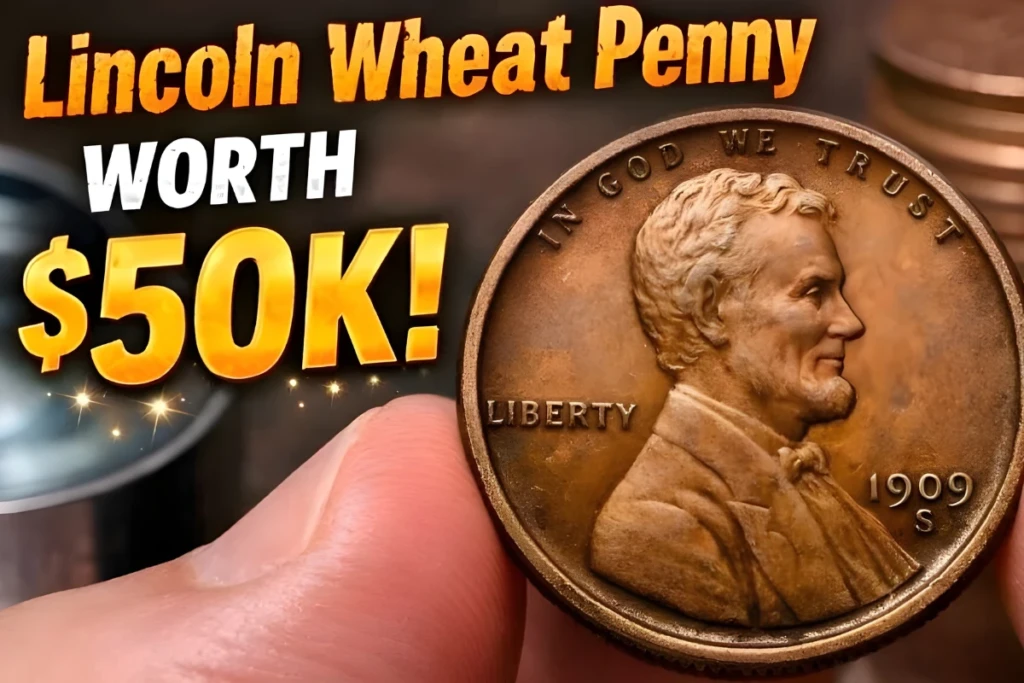
Lincoln Wheat Penny Worth $50,000 : The Lincoln Wheat Penny is one of the most famous coins in American numismatic history. Minted between 1909 and 1958, these small copper coins have become highly sought-after collectibles. Rare varieties have sold for exorbitant prices, with some fetching $50,000 or more at auction. Collectors and hobbyists alike are searching for their remaining pennies in hopes of striking it rich. Understanding why some wheat pennies are so valuable is the first step toward discovering hidden treasures.
The History Behind the Coin
The Lincoln Wheat Penny was introduced in 1909 to commemorate Abraham Lincoln’s 100th birthday. It was the first U.S. coin to feature a real person on the obverse. The reverse featured two stalks of wheat with the words “one cent” written on them, giving the coin its popular nickname. Victor David Brenner designed this coin, and his initials appear on the obverse, making it one of the most valuable varieties today. This coin lasted for nearly five decades until it was replaced by the Lincoln Memorial design in 1959.
The Rarest and Most Valuable Varieties
Not all wheat pennies are the same—a select few are extremely rare and valuable. The 1909-S VDB is considered the most valuable Lincoln cent, with fewer than 485,000 minted. The 1914-D and 1922 plain ones are other special dates that command high prices among serious collectors. Defective coins, such as double-die strikes and off-center prints, can also sell for thousands. Owning any of these rare varieties in good condition can be worth $50,000 or more.

Value Table for Specific Dates
Below is a short guide to some of the most valuable Lincoln Wheat pennies and their estimated value based on condition.
| Coin Date & Variety | Circulated Value | Uncirculated Value | Notable Feature |
|---|---|---|---|
| 1909-S VDB | $700 – $1,500 | $2,000 – $10,000+ | Low mintage, designer initials |
| 1914-D | $200 – $2,500 | $5,000 – $25,000 | Denver mint, scarce supply |
| 1922 Plain | $500 – $3,000 | $10,000 – $50,000 | Missing “D” mint mark error |
| 1943 Copper | $10,000 – $30,000 | $50,000 – $100,000+ | Wartime composition error |
| 1955 Double Die | $1,000 – $5,000 | $15,000 – $50,000 | Dramatic doubling on obverse |
How to Identify Your Coin
To identify a valuable wheat penny, it’s important to look for the date and mint mark on the back of the coin. The mint mark is located directly below the date and may not be “D” for Denver, “S” for San Francisco, or “S” for Philadelphia. Use a magnifying glass to look for doubling on the letters or numbers, which indicates a double-die error. Use a magnet to check whether the coin is copper or steel—1943 copper coins are rare and very valuable. A well-kept coin with sharp details and without excessive wear will always fetch a high price.

Grading and Coin Condition
Coin grading is the process of evaluating a penny’s physical condition on a scale from poor (P-1) to perfect mint state (MS-70). Professional grading services like PCGS and NGC authenticate and assign grades that directly impact a coin’s market value. A 1922 plain penny with an MS-63 grade can be significantly more valuable than the same coin in Fine-12 condition. Even slight differences in the grade of rare key-date coins can translate into thousands of dollars. Always hold valuable pennies by the edges to avoid fingerprints or surface damage that could lower the grade.
Where to Sell a Valuable Penny
Once you’ve identified a valuable wheat penny, choosing the right selling platform is crucial. Renowned auction houses that specialize in rare coins often charge the highest prices for key-date coins. Online coin collecting marketplaces also attract serious buyers who are willing to pay more for authentic coins. Before selling, always have the coin professionally graded and encapsulated to build buyer confidence and maximize its value. Selling through a knowledgeable coin dealer is another good option, especially if you want a faster and more convenient transaction process.
Common Mistakes Collectors Make
Many new collectors make the mistake of cleaning their coins, which permanently destroys their numismatic value. A shiny coin may look good, but cleaning removes its original surface and significantly lowers its grade. Another common mistake is misidentifying a coin’s mint mark or date because it’s worn, leading to inaccurate valuations. Some collectors even forgo professional authentication and sell rare coins for far less than their true market value. Taking the time to research, handle coins carefully, and seek expert advice can make the difference between a small amount and a life-changing sale.
Conclusion
The Lincoln wheat penny remains one of the most exciting areas of American coin collecting for good reason. A small coin, easily overlooked in a jar of change, could truly be worth $50,000 or more to the right buyer. The way to unlock that value is by knowing rare dates, understanding error types, and maintaining the coin’s condition. Whether you’re a seasoned numismatist or a curious newcomer, checking your old pennies is always worth the effort. With patience, knowledge, and a little luck, your next big find might already be in your pocket.