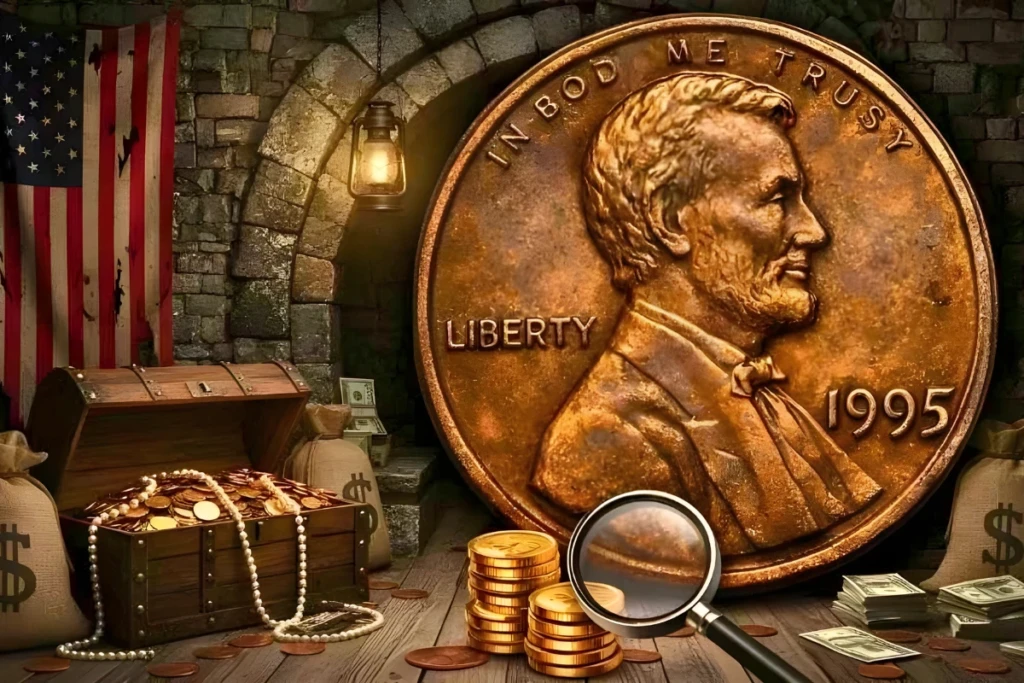
Complete 1995 Lincoln Penny Value Guide: The 1995 Lincoln Penny is a modern U.S. coin that still attracts considerable collector interest. Most examples are common, but some variations and errors can be surprisingly valuable. Many seek the coin’s value because millions of coins are still in circulation. Understanding mintmarks, condition, and rarity is essential to determining its potential value. Some coins are worth just one cent, while others can sell for hundreds of dollars. This guide explains the key factors that influence the value of a 1995 Lincoln Penny.
Overview of the 1995 Penny
The 1995 Lincoln Penny features Abraham Lincoln on the obverse and the Lincoln Memorial on the reverse. It belongs to the Lincoln Memorial Cent series, minted from 1959 to 2008. This coin is composed primarily of zinc with a thin copper plating. In 1995, the penny was minted at three different U.S. Mint locations. These include Philadelphia, Denver, and San Francisco for proof coins. Each mint produced coins with varying rarity levels and collector demand.
Current Market Value
Most 1995 pennies in circulation command a very small premium over face value. Coins with significant wear are typically worth only one cent. However, uncirculated coins with sharp details can sell for a lower premium. Collectors often pay more for coins that are shiny with minimal scratches. High-grade coins certified by grading companies can command higher prices. One of the most important factors affecting market value is their condition.
No Mint Mark
A 1995 penny without a mint mark was struck at the Philadelphia Mint. Philadelphia produced millions of such coins that year. Because the mintage was so high, most examples are still common today. Circulation coins generally carry no collector premium. Uncirculated coins may sell for less, depending on condition. High-grade examples, graded MS67 or higher, can reach substantial collector prices.

1995 D Value
The 1995 D Lincoln penny was minted in Denver and bears a small “D” mark. Denver also produced a large number of pennies that year. Due to high production, most coins are easily found in circulation. Circulating coins are generally valued solely at face value. Uncirculated coins may sell for a slight premium in the coin market. Coins in very good grades can fetch high prices among serious collectors.
1995 S Proof
The San Francisco Mint produced special proof versions of the 1995 Lincoln penny. Proof coins are produced using polished dies and specially prepared blanks. This process creates highly reflective surfaces and sharp design details. These coins were sold in collector proof sets rather than being put into circulation. Because they were carefully handled, many of them remain in excellent condition today. Their value depends largely on the grade and whether the coin is in its original packaging.
Rare Error Coins
Error coins are among the most valuable versions of the 1995 Lincoln penny. Minting errors occur when something goes wrong during the coin-making process. These errors can include double designs, off-center strikes, or die cracks. Collectors actively seek these unique coins because they are so rare. The specific error significantly impacts the selling price. Some major errors can fetch hundreds of dollars or more.

Double Die Errors
One of the most popular varieties is the 1995 double die obverse penny. This error involves obvious doubling of the inscription on the front of the coin. Words like “LIBERTY” and “IN GOD WE TRUST” can be clearly doubled. Unlike minor mechanical doubling, this variety is a genuine mint error. Because it is so popular, collectors often seek this coin. Well-preserved coins can sell for significantly more than ordinary pennies.
Grading Impacts Value
Grading plays a significant role in determining the value of any 1995 Lincoln penny. Grading reveals the coin’s wear and overall preservation. Coins are typically graded on a scale from poor to mint state. Higher grades indicate better surface quality, more luster, and fewer marks. Professional grading services often certify valuable coins for authenticity and condition. A high-grade coin can be worth several times more than a circulated coin.
Where to Sell
If you think you have a valuable 1995 penny, there are several options for selling it. Local coin shops are often the quickest place to get an appraisal. Online marketplaces help sellers reach a large audience of collectors. Auction platforms can also help maximize prices for rare varieties or errors. Coin shows are another popular venue where collectors actively buy and sell coins. Getting a professional appraisal can help determine the most profitable selling strategy.

Conclusion
The 1995 Lincoln penny is generally common but still offers an interesting opportunity for collectors. Most examples in circulation are only worth one cent. However, high-grade coins and rare errors can command a significant premium. Understanding mint marks, condition, and known varieties is essential for accurate value estimation. Collectors search through rolls and pocket change in hopes of finding valuable examples. With careful examination, even a modern penny can be a surprising collectible.